Feed Their Needs
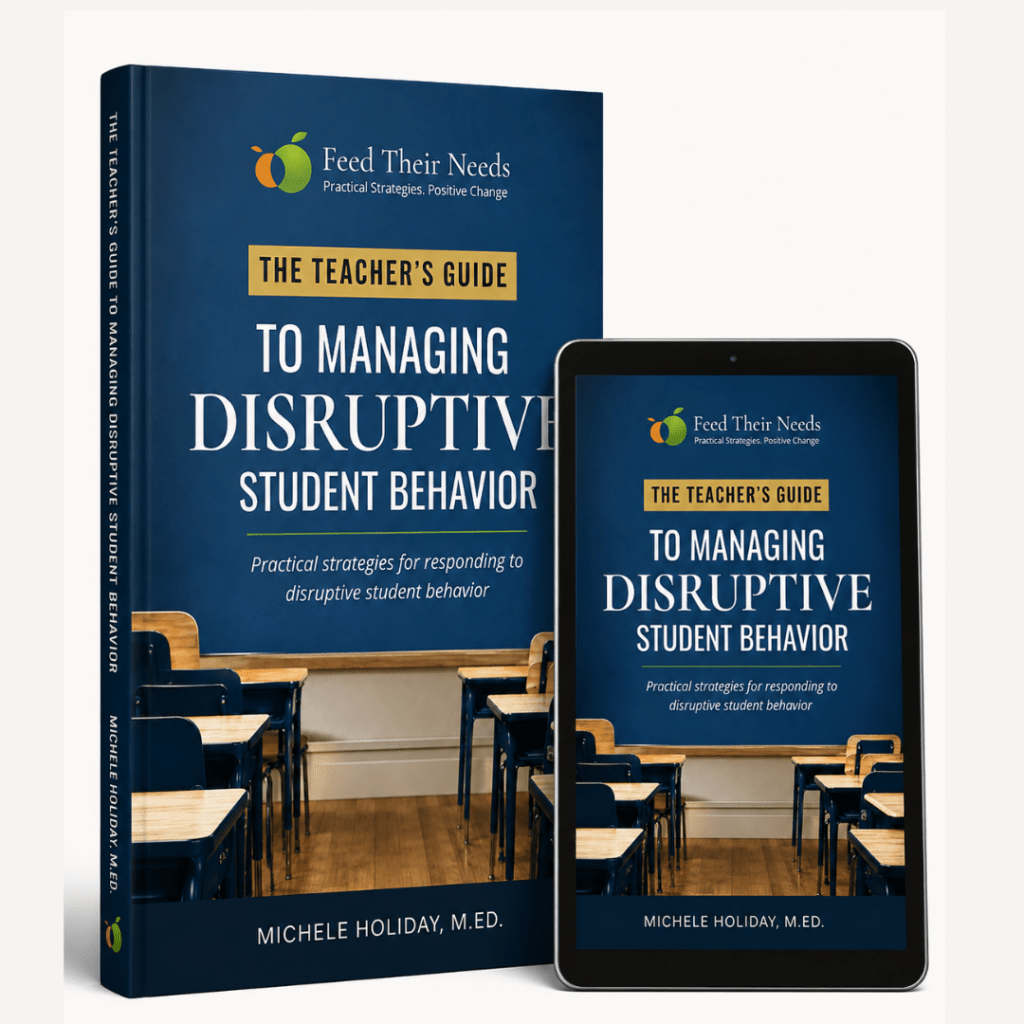
The Teacher’s Guide to Managing Disruptive Student Behavior
Disruptive behavior can quickly interrupt instruction, distract other students, and make it difficult to maintain momentum. This guide introduces you to 11 practical Stopgap Strategies you can use in the moment to reduce disruptive behavior, regain instructional flow, and help motivate students toward more appropriate behavior—all while creating a classroom where students thrive and you love to teach
$12
Learn how to
- Reduce student disruption
- Respond with confidence
- Maintain focus and productivity
At a Glance
- Instant download
- Designed for K-12
- Practical & classroom-tested
Does This Sound Familiar?
- Do classroom interruptions make it difficult to maintain the flow your lessons?
- Do you feel like you’re constantly redirecting the same disruptive behaviors?
- Does one disruptive student often pull the attention of the entire class?
- Do you sometimes know the behavior needs to stop—but aren’t sure what to do in the moment?
- Are you looking for practical strategies that reduce disruptions without escalating the situation?
If you answered “yes” to any of these questions, this guide was created for you.
Inside This Guide You’ll Learn How To:
✔ Use 11 Stopgap Strategies to respond to disruptive behavior in the moment.
✔ Quickly reduce disruptions so you can regain instructional flow
✔ Redirect behavior without allowing the disruption to become the focus of your lesson.
✔ Motivate students to stop engaging in disruptive behavior and make more appropriate choices.
✔ Choose practical responses you can begin implementing immediately.
✔ Move beyond simply stopping behavior toward helping students become engaged, productive learners.
What’s Included
This classroom-ready guide introduces you to 11 Stopgap Strategies for responding to disruptive student behavior.
Each strategy walks you through:
- What Is the Strategy? — A clear definition and description of the strategy.
- Why It Works — Insight into why the strategy can help reduce disruptive behavior.
- Try This — Practical implementation steps and tips to help you put the strategy into action.
- My Pro Tip — Additional advice from Dr. Michele Holiday to help you use the strategy more effectively.
- After Using This Strategy — Guidance to help you evaluate the student’s response and determine your next steps.
Keep all 11 Stopgap Strategies at your fingertips with a quick-reference summary sheet you can return to whenever you need a reminder.
No complicated system to memorize. These are practical strategies you can begin using today and continue refining as you build your classroom-management skill set.
Designed to be practical, easy to implement, and useful in real classroom moments, these strategies are tools you can begin using today and continue refining throughout the school year.
Meet the Author

Michele Holiday, M. Ed.
Michele Holiday is a Behavior Strategist and educator who has partnered with more than 60 schools to help teachers and school leaders build effective classroom management systems that support positive student behavior.
Her practical, relationship-centered approach equips educators with strategies they can implement immediately to reduce disruptions, strengthen classroom routines, and create learning environments where students can thrive.
Ready to Spend Less Time Managing Disruptions and More Time Teaching?
You don’t have to wait until the next major behavior incident to figure out what to do.
Equip yourself with 11 practical Stopgap Strategies you can begin using today to reduce disruptive behavior, regain instructional flow, and help students make more productive behavioral choices.
The more you use them, the more you can refine your responses and discover what works best for you and your students.
Reduce the disruption. Regain the flow. Get back to teaching.
Frequently Asked Questions
Is this guide for elementary teachers?
Yes. The Stopgap Strategies can be adapted to meet the developmental needs of elementary students and the realities of an elementary classroom.
Is this guide appropriate for middle school teachers?
Absolutely. The strategies provide practical options for responding to the interruptions and disruptive behaviors that can quickly affect instructional flow in middle school classrooms.
Can high school teachers use this guide?
Yes. The strategies can be adapted for high school students and different classroom environments while maintaining age-appropriate responses
Do I have to use all 11 strategies?
No. Think of the strategies as tools in your classroom-management toolbox. Different students, behaviors, and situations may require different responses. Begin with the strategies that fit your needs and continue to practice and refine them over time.
Are these strategies only for teachers?
No. While the guide is written with classroom educators in mind, the strategies can also be useful for other school staff who regularly work with students exhibiting disruptive behavior.
Is this a printable resource?
Yes. You’ll receive a downloadable PDF that you can print or access digitally whenever you need it.
When will I receive my guide?
Immediately after your purchase, you’ll receive access to download your guide.
Can I share this guide with other teachers?
Each purchase includes a single-user license. If you’d like multiple teachers in your school to have access, please contact us about our school licensing options.
Looking for Help with Other Behavior Challenges?
Every classroom behavior requires a thoughtful response. Expand your classroom management toolbox with these companion guides.
Teacher’s Guide for Managing Disrespect
Practical responses that protect instruction and strengthen classroom relationships.
Teacher’s Guide for Managing Defiant Behavior
Calm, consistent responses that help you avoid power struggles and respond with confidence.
Teacher’s Guide for Managing Disengaged Behavior
Simple strategies to increase participation, strengthen engagement, and reconnect students to learning.
Build Your Complete Classroom Management Toolbox
Why stop with one strategy? Different behaviors require different responses.
Save time and feel more confident by equipping yourself with the complete Teacher’s Guide Collection, featuring practical, classroom-ready strategies for managing:
- ✔ Disrespect
- ✔ Disruption
- ✔ Defiant Behavior
- ✔ Disengaged Behavior
⬛ Explore the Complete Classroom Behavior Collection → Click any of the images below to learn more about each guide and add it to your cart.